"Is my car ready?" Answered, every time.
That call pulls your service writer away all day. Infocall builds a shop agent that opens the repair order and answers it, books the service, and stays off price unless you say otherwise.

The status call, answered without your service writer
"Is my car ready?" comes in all day. The agent takes that call instead.
It finds the customer, opens the repair order and reads back what it holds: finished and ready, still in the bay, waiting on a part.
If the order does not say, it does not invent a pickup time. It takes the number and has the writer call back.
Press the call button and a real agent answers. The shop is fictional; the agent is not.
“Is my car ready?”
- 01Find customer Dana Ruiz, 2019 Outback
- 02Check repair status Work complete, ready
“It is finished and ready for pickup whenever suits you.”
Most of your calls are a lookup, a booking, or a price
Infocall starts by going through your own calls, so the agent is built around what your customers actually ask, not a script.
- Is my car ready, answered from the repair order
- Book a service, with the vehicle, the concern and a time
- What will this cost, answered or handed off, by your rule
- Do you work on this make, from what you told us
- When can you take it, checked against your schedule
- An update on a job in progress, and what it is waiting on
You decide whether the agent quotes at all
In this trade the fear is an agent putting a number on a repair nobody has looked at yet.
So price is a rule the agent follows. It can state fixed-price work, give the diagnostic fee you approved, or stay off cost entirely and pass every price question to a service advisor.
The same rule covers what it must never promise: a completion time no technician has given, a diagnosis over the phone, approval for extra work.
| Price question | What the agent does |
|---|---|
| Fixed-price service | States the price you gave us, nothing beyond it |
| Diagnostic or inspection fee | Quotes the figure you approved, word for word |
| A repair nobody has seen yet | Declines to guess and books the inspection |
| An estimate already on the repair order | Reads back what your system holds |
| Warranty or insurance | Handed to a person by default |
| Anything outside your rules | A service advisor calls back |
It reads the same repair order your writer does
Shop management software is rarely new, and it does not need to be. The agent reads the repair order, the estimate and the promised time where they already live.
Old software is a normal starting point: some systems connect directly, some need a workaround, and where one cannot be reached the agent takes the details and hands them to a person.
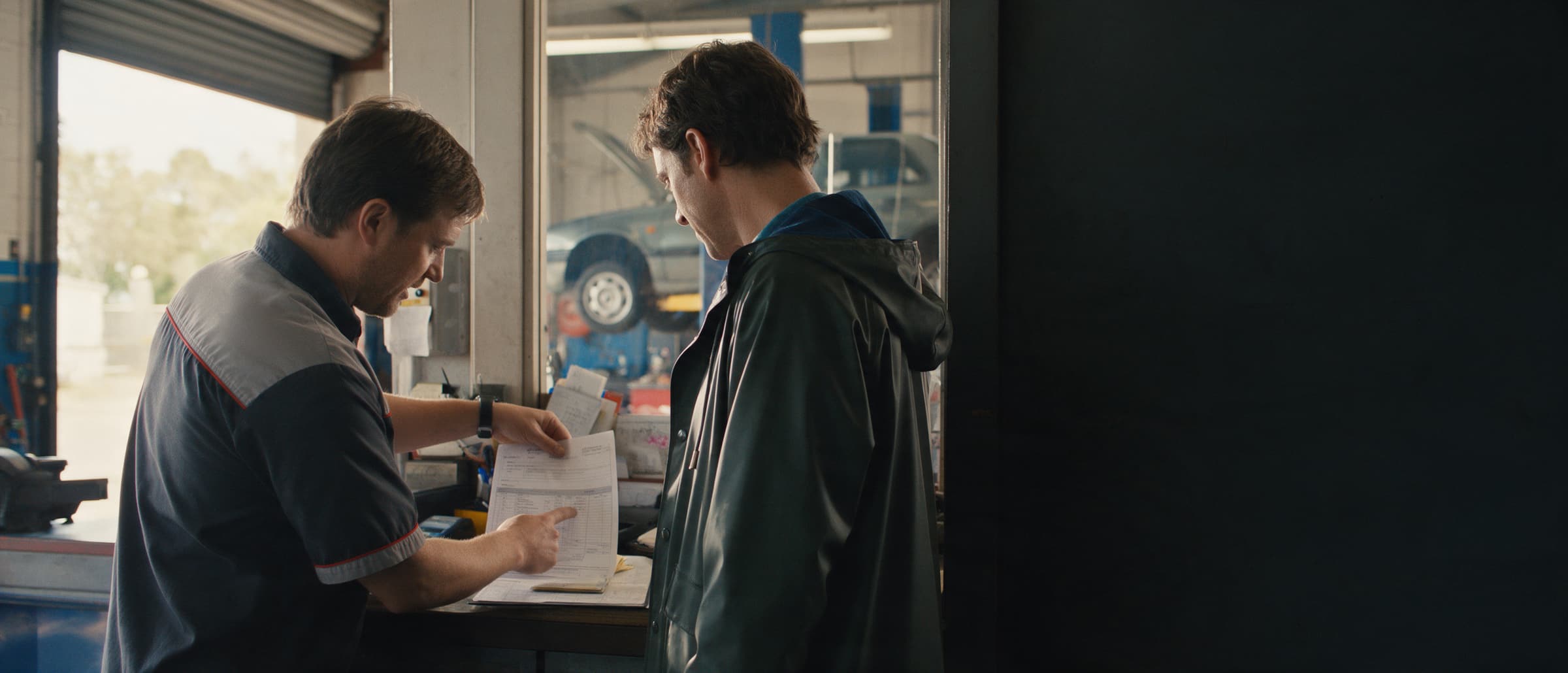
The lift stayed up. The call got answered.
The drop-off rush is when the phone rings most
Customers arrive and phone in the same half hour, and the writer cannot serve both.
The agent takes the phone for that half hour, and the writer takes the customers in front of him. After hours, the same agent answers.
Hear it take a real call.
Press the button and a real agent answers. The business is fictional. The agent is not.
Auto repair demo
Westside Auto Care
Talk with your mic. Try: is my car ready for pickup?
Questions people actually ask.
Does it actually tell a customer whether their car is ready?
Yes, from the repair order, on the call. The caller gets an answer, not a callback. If it is not sure, it says so and gets a person, instead of guessing.
Will it quote prices to my customers?
Only if you decide it should, and only the figures you approved. The rule holds on every call, including the ones that come in overnight.
Can a customer approve extra work through it?
No. Approving a repair is your service advisor's conversation, and the agent says so. It takes the customer's number and the best time to reach them, and the advisor picks it up from there.
Give every caller your best, every time.
The first call is free. Nothing is committed until you have a scope and a price.
Last updated